
Ticks
Ticks are a common pest for animals that are outside for any period of time and are found throughout the United States. Tick species tend to vary in different geographic regions so check with your veterinarian about the common tick in your area. Typically, ticks are most prevalent during the warmer months, with peaks in the spring and fall, but this may vary depending on the tick species in question. Environmental conditions may extend the peak season.
Ticks bury their heads in the skin of your cat and gorge themselves on blood, causing mild irritation; however, ticks may also carry several debilitating diseases that pose a serious threat to animals and humans.
How will ticks affect my cat? 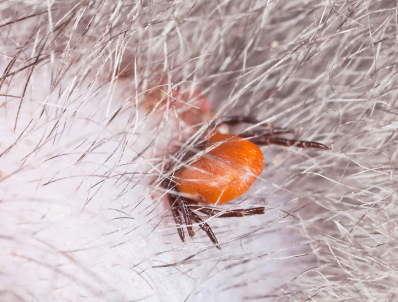
Ticks rarely cause clinical signs unless a disease has been transmitted. Symptoms of infection may include the following:
- Fever
- Anemia
- Loss of appetite
- Lethargy or depression
How do I prevent my cat from getting ticks?
Most ticks, approximately the size of a pinhead prior to feeding, are not spotted until they become engorged with your cat’s blood. Regardless of how long the tick has been feeding on your pet, you should remove it immediately with tweezers while wearing gloves. Any contact with the tick’s blood can transmit infection. Ask your veterinarian for proper tick removal methods because simply pulling the tick off of your animal can leave the mouth, head, or other body parts attached to your cat.
If you live in areas that contain heavy populations of ticks, check your cat often and consult your veterinarian for the latest methods of control.
For veterinary professionals, more detailed information on ticks can be found at https://www.capcvet.org/guidelines/ticks/.
Did you know?
- While ticks themselves cause only mild irritation, they can carry diseases that pose a serious threat to animals and humans.
- If you find a tick on your cat, put on gloves and remove the tick with tweezers.
- Just pulling off the tick can leave body parts attached to your cat. Ask your veterinarian about proper tick removal and tick control.
- Illnesses transmitted by ticks can case fever, anemia, loss of appetite, lethargy and depression.
Learn More about Specific Parasites
- Overview
- Coccidia
- Dandruff
- Ear Mites
- Fleas
- Heartworms
- Hookworms
- Mange
- Roundworms
- Tapeworms
- Ticks
- Toxoplasmosis
Ask Your Veterinarian
If you live in an area with ticks, keeping your cat indoors is the best way of preventing ticks. Ticks can cause anemia as well as carrying many diseases. Your veterinarian may prescribe medication that helps prevent ticks from attaching to your pet and kills any that do, and will show you the safe way to remove ticks without breaking off the head and leaving some of the tick attached to your pet.